You hit the button on your way out the door, the opener hums, and then — nothing. Or worse, the door lurches sideways, sags on one corner, and stops halfway. Your stomach drops a little. You’re going to be late, the car is stuck, and something is clearly very wrong.
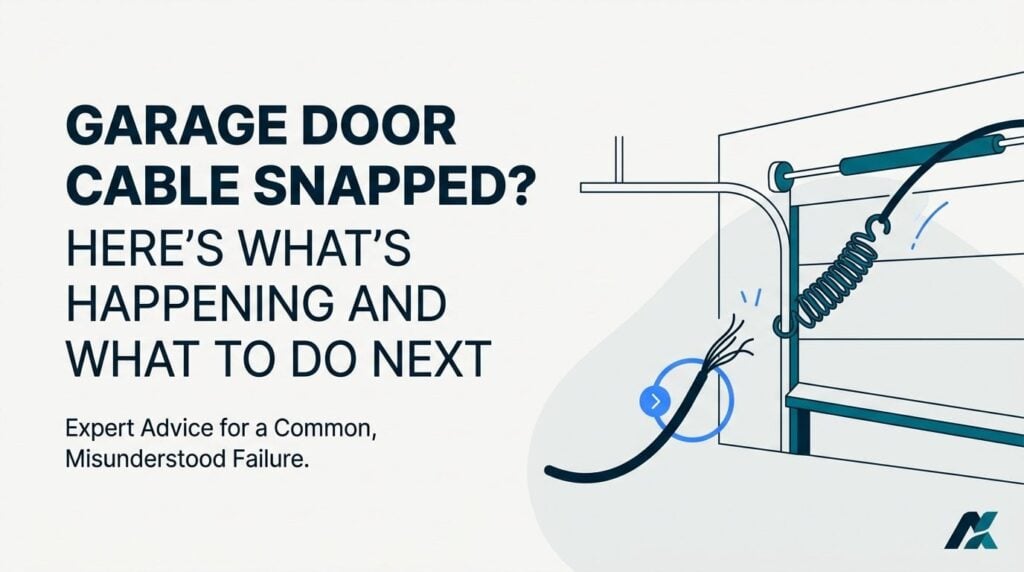
If this sounds familiar, there’s a good chance your garage door cable snapped. It’s one of the more common garage door failures we see, and it’s especially prevalent in places like Raleigh, Myrtle Beach, and Knoxville, where humidity, coastal salt air, and swinging temperatures quietly eat away at hardware over time.
Here’s what you need to know: a snapped cable is fixable, but it’s also a genuine safety hazard that needs professional attention right away. This article will walk you through what happened, why it’s not something to mess with yourself, and exactly what to do next.
What Does a Garage Door Cable Actually Do?
Think of your garage door cable as the muscle that works alongside your spring system to lift and lower the door smoothly and evenly. Without it, the spring can’t do its job properly, and the door has no controlled way to move.
The way cables function depends on which type of spring system your door has. With a torsion spring system, the cable wraps around a drum at each end of the torsion bar above the door. As the spring winds and unwinds, the cables guide the door up and down along the tracks. With extension spring systems, the cables run through pulleys and attach to the bottom corners of the door, working in tandem with the springs to counterbalance the door’s weight.
Either way, these cables are under serious tension. A standard two-car garage door can weigh well over 200 pounds, and the cable system is constantly managing that load every time the door moves. That tension is what makes a snapped cable so dangerous, and why this repair is never a DIY situation.
Why Do Garage Door Cables Snap?
Wear and Fraying Over Time
Cables don’t last forever. In busy households, a garage door might cycle open and closed a dozen or more times a day. That daily repetition causes gradual fraying, especially at stress points like the drum or the bottom bracket where the cable anchors. Eventually, enough strands weaken that the cable gives way under load.
Regional Climate Makes It Worse
If you live along the Grand Strand in Myrtle Beach or anywhere near the South Carolina coast, salt air is a real problem. It works into the steel strands of the cable and corrodes them from the inside out, accelerating failure well before the cable looks visibly worn. You might not see it coming until it snaps.
In Knoxville and across East Tennessee, the issue is temperature swings. Cold winters followed by hot, humid summers cause metal components to expand and contract repeatedly. Over years, that cycle creates metal fatigue that weakens cables and hardware even when they look fine on the surface.
Raleigh and the Research Triangle have also seen enormous suburban growth, with newer communities in Wendell, Youngsville, and Wake Forest putting heavy daily use on garage doors that homeowners often don’t think to inspect. Newer doesn’t mean immune to wear.
A Broken Spring Can Trigger a Cable Snap
This one catches a lot of homeowners off guard. When a torsion or extension spring breaks suddenly, the cable absorbs the full weight of the door in an instant. That shock load is often more than the cable can handle, especially if it was already showing wear. So if your spring went first, your cable may have followed right behind it.
Stop Right There — This Is Not a DIY Repair
We want to be direct about this: do not attempt to reattach, replace, or adjust a garage door cable yourself.
The tension stored in a garage door spring and cable system is significant. A cable that’s snapped or partially frayed can recoil with serious force. People have been badly injured attempting garage door cable repairs without the right tools, training, and knowledge of how to safely release tension from the system.
There’s also a risk of making things worse. Trying to manually force the door open or closed when a cable is broken can cause the door to come crashing down, damage the opener mechanism, bend the tracks, or shift weight unevenly onto the remaining hardware. What starts as a cable repair can quickly become a much more expensive problem.
The right move is simple: leave the door where it is, disconnect the opener so nobody accidentally activates it, and call a professional. Don’t use the door at all until it’s been repaired.
What to Tell the Technician When You Call
When you call for a garage door cable repair, having a few details ready will help the technician arrive prepared with the right parts and give you the most accurate estimate upfront. Here’s what to have on hand:
- Which cable broke: Is it the left side or the right side? Stand inside the garage facing the door to orient yourself.
- Door brand and model: Check the inside panel of the door or the owner’s manual if you have it. Even a partial brand name helps.
- Door size: Is it a single-car door or a double (two-car) door? Approximate dimensions if you know them.
- Spring type: Do you have one large spring centered above the door (torsion) or two springs running horizontally along the tracks on each side (extension)? If you’re not sure, describe what you see and the tech can help identify it.
- Is the door stuck open or closed: This matters for scheduling and safety prep before the visit.
- Any sounds before it snapped: Grinding, popping, or creaking in the days or weeks before the failure can tell a technician a lot about what else might need attention.
If you can safely take a photo or short video of the cable area and the spring from a distance, send it along before the visit. It helps the tech confirm parts and speeds up the whole process.
What Does a Professional Cable Repair Actually Look Like?
When a Skylift technician arrives, the first thing they’ll do is a full inspection of both cables, the springs, the drums, and the pulleys. Even if only one cable snapped, they’ll assess the other side too, because cables on the same door wear at the same rate. Replacing just one and leaving a worn cable on the other side is a short-term fix that often leads to a second service call within months.
In most cases, both cables are replaced at the same time. The tech will also check the drums and bottom brackets for wear or damage, re-tension the system properly, and test the door through several full cycles to make sure everything is balanced and operating safely.
If a spring also broke, which is common, that gets addressed in the same visit. Torsion spring replacement and cable replacement often go hand in hand, and handling both at once saves time and gets your door back to full function in a single appointment. For most homes, this is a same-day repair.
How Do You Prevent This from Happening Again?
Annual Inspections Catch Problems Early
The most effective thing you can do is schedule a professional inspection once a year. A technician can spot fraying cables, worn pulleys, corroded hardware, and springs that are getting close to the end of their lifespan — all before anything snaps. This matters especially in coastal markets like Myrtle Beach, where salt air accelerates corrosion, and in humid climates like Raleigh and Knoxville where rust and metal fatigue are ongoing concerns.
What You Can Do Safely at Home
You don’t need to touch anything to keep an eye on your system. Visually check the cables from a distance every few months. Look for visible fraying, kinking, or rust on the cable strands. Listen for new sounds during operation. If something looks or sounds off, call for an inspection before it becomes a failure.
Lubricating the rollers, hinges, and tracks with a garage door-specific lubricant is also a safe homeowner task that reduces wear on the whole system.
Consider a Maintenance Plan
Skylift’s Skycare Club Membership is designed exactly for this kind of preventative care. Members get scheduled annual maintenance visits, which include a full inspection of cables, springs, hardware, and the opener — so small issues get caught before they turn into emergency repairs. For homeowners in our service areas across North Carolina, South Carolina, and Tennessee, it’s one of the easiest ways to stay ahead of wear.
Quick Answers to Common Questions
Most cable replacements are completed in a single visit, often within an hour or two depending on the condition of the rest of the system.
No. Not even once. The door is unbalanced and could fall, cause further damage, or injure someone. Keep it in place and keep everyone away from it until it’s repaired.
Generally, no. Standard homeowner’s policies typically don’t cover mechanical wear and failure. It’s worth a quick call to your provider to confirm, but most cable repairs are out-of-pocket costs.
Getting Your Door Back on Track
A garage door cable snapped is alarming in the moment, but it’s a straightforward repair when a qualified technician handles it quickly. The key is not to wait, not to try to work around it, and not to attempt a fix yourself. The tension in that system is serious, and the risk isn’t worth it.
Leave the door alone, gather the details listed above, and give us a call. Skylift Garage Doors serves homeowners across Raleigh, Myrtle Beach, and Knoxville with fast, local service from technicians who know these climates and these doors. We’ll get your system inspected, repaired, and tested so you can get back to your day safely.
Call Your Local Team(844) 755-5149