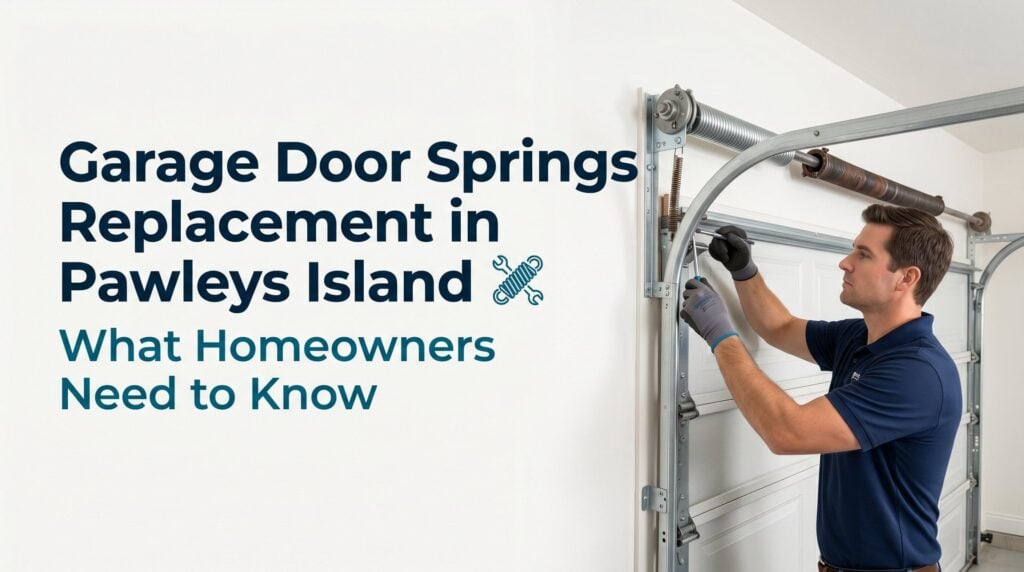
If you’ve ever heard a loud bang from your garage and walked out to find the door frozen in place, you already know what a broken spring feels like. It’s one of the most common garage door problems homeowners on Pawleys Island deal with, and the coastal environment here makes it happen more often than most people expect.
Between the salt air rolling in off the Atlantic, the humidity drifting up from the marsh, and the wind stress that comes with every hurricane season, the hardware on your garage door takes a beating that inland homeowners simply don’t face. Springs, cables, and hinges corrode faster here. It’s just the reality of living on the Grand Strand.
Here, we walk you through how to recognize a broken spring, understand what type you have, know what replacement actually involves, and make smart decisions before you call a technician. One thing to be clear about upfront: torsion spring replacement is not a safe DIY project. The goal here is to help you be an informed homeowner, not a weekend mechanic.
Step 1: Recognize the Signs of a Broken Garage Door Spring
The most common way homeowners discover a broken spring is a loud bang, sometimes described as a gunshot or something falling in the garage. That’s the spring snapping under tension. After that, the door simply won’t open, or it lifts a few inches and stops while the opener motor strains.
Here’s the thing: most people assume the opener is broken. They’ll fiddle with the remote, reset the unit, check the outlet. But the opener is usually fine. It just can’t lift the door because the spring that counterbalances the door’s weight is gone. Understanding the garage door spring replacement signs early can save you from a bigger headache down the road.
What to Look For
Do a quick visual check above the door. Look at the horizontal metal bar mounted above the opening. If you see a visible gap or separated coil in the spring, that’s your answer. With extension springs, which run along the sides of the tracks, you may notice one side of the door sagging or a spring that looks stretched out or broken in two.
In Pawleys Island’s salt air environment, you might also notice orange or reddish rust coating the spring coils well before they actually snap. Homes near Litchfield Beach, along Kings River Road, or in marsh-side neighborhoods tend to see corrosion-related wear earlier than you’d expect, sometimes years ahead of the typical lifespan. For a full picture of what can go wrong, it helps to review common garage door problems that coastal homeowners face.
Important: Do not try to force the door open manually if you suspect a broken spring. A garage door without a functioning spring can weigh well over 100 pounds and is genuinely difficult and dangerous to lift without proper support.
Step 2: Understand Which Type of Spring Your Door Uses
There are two main spring types used in residential garage doors, and knowing which one you have helps you understand what’s involved in replacing it.
Torsion Springs are mounted horizontally above the door on a metal shaft. They work by twisting and storing rotational energy. Most modern Pawleys Island garage doors use torsion springs because they’re more durable, handle heavier doors better, and generally last longer under normal conditions.
Extension Springs run along the horizontal tracks on either side of the door and stretch as the door closes. They’re more common in older homes or lighter single-car doors. If your home was built before the mid-1990s or has a basic, lighter door, you may have extension springs.
Why the Difference Matters
The replacement process, parts cost, and safety considerations differ significantly between the two types. Torsion springs require specialized tools and precise tension calibration. Extension springs are under less tension but still carry real risk if handled improperly. Either way, a trained technician is the right call.
Knowing your spring type also helps you have a more informed conversation when you schedule garage door repair Pawleys Island service, so you’re not going in completely blind.
Step 3: Understand Why Coastal Conditions Accelerate Spring Wear
This is the part that catches a lot of Pawleys Island homeowners off guard. Springs that might last a decade or more in a place like Knoxville or Raleigh can wear out noticeably faster here, and the reason is straightforward: salt air and coastal humidity are hard on metal.
Pawleys Island sits between the Atlantic Ocean and a network of tidal creeks and marshes. That means salt-laden air comes at your garage hardware from multiple directions. Homes near the causeway, along Ocean Highway (US-17), or tucked into marsh communities like Hagley Estates deal with this constantly, not just during storms.
Hurricane Season Adds Another Layer
From June through November, the South Carolina coast is in hurricane season. Even when a named storm doesn’t make a direct hit, the pressure changes, wind gusts, and heavy rainfall that come with tropical systems put repeated stress on your garage door and its spring system. That cumulative stress adds up over time.
Temperature swings also play a role. The Grand Strand doesn’t get the extreme cold that East Tennessee sees, but the metal still expands and contracts with seasonal changes, gradually weakening spring tension.
When you’re scheduling spring replacement, ask your technician about galvanized or powder-coated springs. These hold up better in coastal environments and are worth the investment for Pawleys Island conditions specifically. Homeowners in the Myrtle Beach area face the same challenges and benefit from the same hardware upgrades.
Step 4: Know What the Replacement Process Actually Involves
Torsion spring replacement looks deceptively simple from the outside. It’s not. The springs are wound under significant tension using specialized winding bars, and getting the torque wrong, in either direction, can cause the spring to release violently. This is genuinely dangerous without the right tools and training. If you’re weighing whether to attempt this yourself, the case for calling a pro over DIY garage door repair is especially strong when springs are involved.
Here’s what a professional technician actually does during a spring replacement:
- Measure the door’s weight and calculate the correct spring specification, including wire size, inside diameter, and length.
- Safely release tension from the existing spring and remove it from the shaft.
- Install the new spring and wind it to the precise tension needed for your specific door.
- Test the door balance and adjust if needed.
Replace Both Springs, Not Just One
Industry practice is to replace springs in pairs. If one has broken, the other has been under the same stress for the same amount of time in the same coastal environment. Replacing just the broken one often means you’re back to square one within months. A good technician will recommend replacing both, and in Pawleys Island’s salt air conditions, that advice is especially sound.
Most spring replacements take under two hours when handled by an experienced tech. Skylift Garage Doors serves the Pawleys Island and Myrtle Beach garage door repair area with technicians who know Grand Strand conditions and stock hardware built for coastal climates.
Step 5: Ask the Right Questions Before Scheduling Service
Before you book anyone for spring replacement, a few questions are worth asking. They help you understand what you’re getting and filter out anyone who isn’t giving you straight answers.
What spring spec will you use? A technician should be able to tell you the wire size, diameter, and whether the spring is rated for coastal or high-humidity environments. You can also request garage door spring repair Pawleys Island service specifically to ensure you’re working with a tech familiar with local conditions.
Do you replace both springs or just the broken one? The right answer is both, especially on a door that’s been exposed to salt air for several years.
Is there a warranty on parts and labor? Quality service comes with a guarantee. Skylift Garage Doors backs their work with a quality service guarantee, and their hundreds of five-star reviews from local homeowners reflect that consistency.
Will you inspect the cables, drums, and bottom brackets? These components wear at similar rates to springs. A thorough tech will check them while they’re already there, saving you a second service call down the road. If your door has other issues beyond the spring, reviewing the signs of garage door repair you shouldn’t ignore can help you communicate the full picture to your technician.
Step 6: Plan for Preventive Maintenance After Replacement
New springs won’t stay new forever, but a basic maintenance routine goes a long way, especially in a coastal climate like Pawleys Island’s. Following proven garage door maintenance tips can significantly extend the life of your new hardware.
Lubricate every six months. Use a silicone-based lubricant or a product specifically designed for garage doors. Apply it to the springs, cables, rollers, and hinges. Avoid WD-40, which can actually attract dirt and accelerate wear on metal components.
Inspect for rust quarterly. A quick visual check of the spring coils takes about thirty seconds. Catching surface corrosion early, before it works into the metal, can prevent premature failure. Near the Pawleys Island Pier area or anywhere close to the marsh, this matters more than most homeowners realize. If you’re also thinking about upgrading your system while the technician is on-site, exploring new garage doors Pawleys Island options is worth a conversation.
Consider the Skycare Club Membership
Skylift’s annual garage door maintenance membership is worth looking into if you want ongoing peace of mind. A trained technician comes out annually to inspect and tune the full system, catching small issues before they become expensive ones. For a Pawleys Island homeowner dealing with salt air, humidity, and hurricane season every year, that kind of proactive attention makes a real difference.
Before hurricane season kicks off in June, it’s smart to have springs and hardware inspected. A door that’s been through a few coastal summers deserves a closer look before the next round of tropical weather arrives. Homeowners in nearby Murrells Inlet have found that investing in new garage doors home value Murrells Inlet upgrades pays off in both function and resale appeal.
Frequently Asked Questions
Under normal conditions, springs are typically rated for around 10,000 cycles. In coastal environments with salt air and humidity, you may see wear earlier than the typical 7-10 year estimate, particularly without regular lubrication and maintenance.
Technically yes, but the door will be extremely heavy without the spring’s counterbalance. It’s best to avoid it until the spring is replaced
It varies depending on spring type, door size, and whether you’re replacing one or both springs. The best move is to get a quote from a local technician who can assess your specific setup. You can also explore garage door openers Pawleys Island options if your opener needs attention at the same time.
Skylift Garage Doors serves Pawleys Island and the greater Myrtle Beach area and offers prompt scheduling for spring repairs. Call or book online to check availability.
The Bottom Line for Pawleys Island Homeowners
Broken springs are one of the most common, and most urgent, garage door problems you’ll face living on the South Carolina coast. The salt air, marsh humidity, and annual hurricane season all work against your hardware in ways that homeowners in other parts of the country simply don’t deal with.
Acting quickly matters. A door stuck in the down position is an inconvenience. A door stuck in the up position during a storm is a real problem.
Skylift Garage Doors knows the Grand Strand, knows the climate, and was named to the IDA 2026 Top 100 Door Dealers List for good reason. Their local technicians stock hardware built for coastal conditions and give you honest assessments rather than unnecessary upsells.
Don’t wait on a broken spring. Schedule Now! and get your door back in working order before the next storm season rolls in.