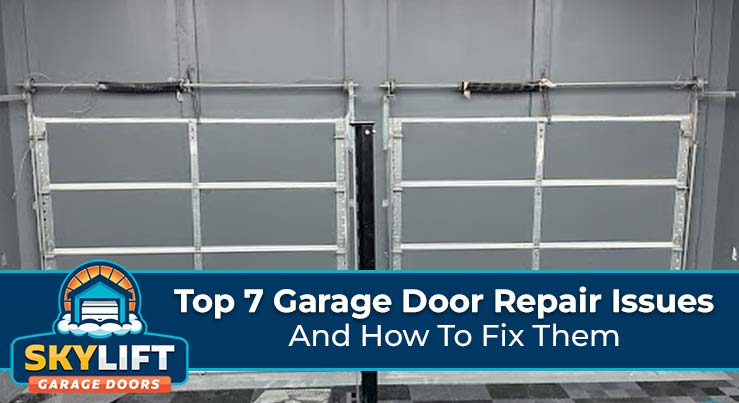
A well-functioning garage door keeps your home secure, your vehicles safe, and your day running smoothly. But when something goes wrong, it can throw your whole routine off — especially here in Myrtle Beach where we open and close our doors every day, rain or shine.
If you’re seeing squeaks, stalls, noises, or a door that just won’t cooperate, you’re not alone. These are the 7 most common garage door problems local homeowners face — and what you can do about them.
Let’s break them down in a way that’s easy to understand (no tech jargon, just real solutions).
1. Garage Door Won’t Open or Close
This is the most urgent and obvious issue — and it can stem from a few different causes.
Common Causes
- Obstructed safety sensors
- Broken remote battery
- Track blockage
- Worn or broken springs
What You Can Do
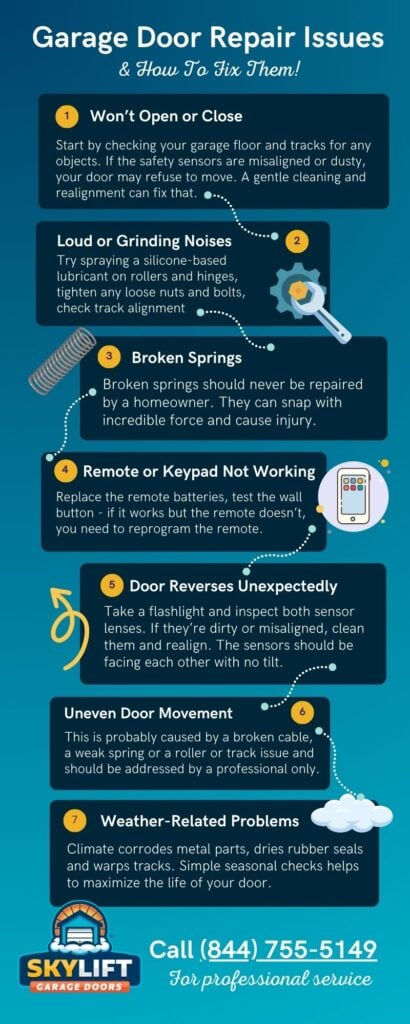
Start by checking your garage floor and tracks for any objects. If the safety sensors are misaligned or dusty, your door may refuse to move. A gentle cleaning and realignment can fix that.
If the problem continues or the springs look damaged, it’s time to call a professional.
Pro Tip: Don’t force the door up or down — this can damage the opener or other components.
2. Loud or Grinding Noises
Those squeaks and rattles you hear every time you start or stop your door? They’re not normal — and they usually won’t go away on their own.
Why It Happens
- Loose hardware
- Dry or worn rollers
- Misaligned tracks
How to Fix It
Begin with a little maintenance:
- Spray a silicone-based lubricant on rollers and hinges
- Tighten any loose nuts and bolts
- Check track alignment (misaligned track = friction = noise)
If the noise persists, it might be time to replace worn rollers or have a technician check your system.
3. Broken Springs
Garage door springs are under high tension — they do the heavy lifting so your opener doesn’t have to. When they break, the door becomes very heavy, uneven, or won’t move.
Danger Alert
Broken springs should never be repaired by a homeowner. They can snap with incredible force and cause injury.
Professional Fix
A trained technician will:
- Assess spring condition
- Replace with the correct size and strength
- Balance the door to ensure smooth operation
Trust us — this is not a DIY job.

4. Remote or Wall Button Not Working
If your remote suddenly stops responding or the wall button feels unresponsive, the issue may be simpler than you think — or oddly complex.
Quick Checks
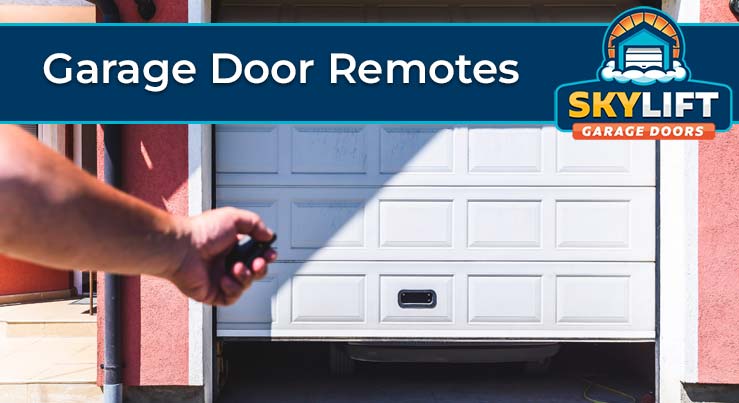
- Replace the remote batteries
- Test the wall button (if it works but the remote doesn’t, your remote needs reprogramming)
When It’s More Than Batteries
Sometimes wiring problems or a failing opener can cause these symptoms. If simple fixes don’t help, it’s time for professional diagnostics.
5. Door Reverses Unexpectedly
You press the button and the door starts moving… then suddenly reverses itself without touching anything. Frustrating!
Common Causes
- Misaligned photo-eye sensors
- Dirty sensor lenses
- Obstruction in the travel path
DIY Check
Take a flashlight and inspect both sensor lenses. If they’re dirty or misaligned, clean them and realign. The sensors should be facing each other with no tilt.
If reversing continues, your opener’s force settings may need adjustment.
6. Uneven Door Movement
Does one side of the door rise faster than the other? That’s not just annoying — it’s unsafe.
Likely Causes
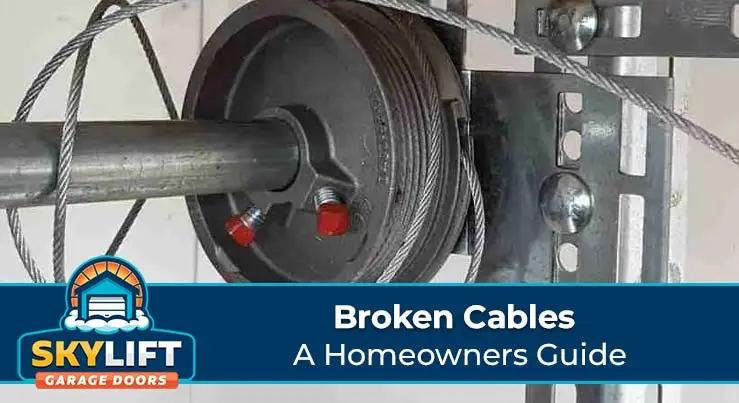
- Broken cable
- Weak spring
- Roller or track issue
Why You Shouldn’t Ignore It
An uneven door puts stress on the opener and other parts. Fixing a small imbalance now prevents major costs later.
This one almost always needs professional attention.
7. Weather-Related Problems
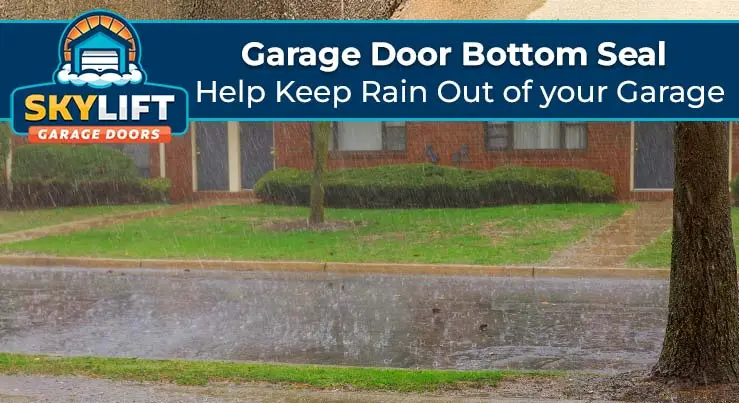
Here in Myrtle Beach, humidity, heat, and ocean air can accelerate wear on garage door systems.
What Weather Does
- Corrodes metal parts
- Dries rubber seals
- Warps tracks over time
- Stresses opener motors
How to Protect Your Door
- Regular maintenance
- Rust-inhibiting lubricants
- Weatherstripping replacement
Simple seasonal checks help your door stand up to the coastal climate.
Garage doors are complex machines.
Many issues look similar on the surface but have very different underlying causes.
If you’re experiencing any of the problems above, don’t wait — the sooner you address them, the longer your door will last and the fewer surprises you’ll have.
Let us know if you’d like help tackling any of these issues!
(844) 755-5149More Expert Garage Door Advice

When to Call a Professional
If a problem sounds serious, dangerous, or you’re not confident fixing it, calling a garage door expert is the safest move.
- Professionals will:
- Identify hidden damage
- Balance your door safely
- Replace worn components the right way
- Spot problems before they become expensive


MYRTLE BEACH, SC
SKYLIFT GARAGE DOORS

WAKE FOREST, NC
SHOWROOM
1839 S Main St #188
Wake Forest, NC 27587