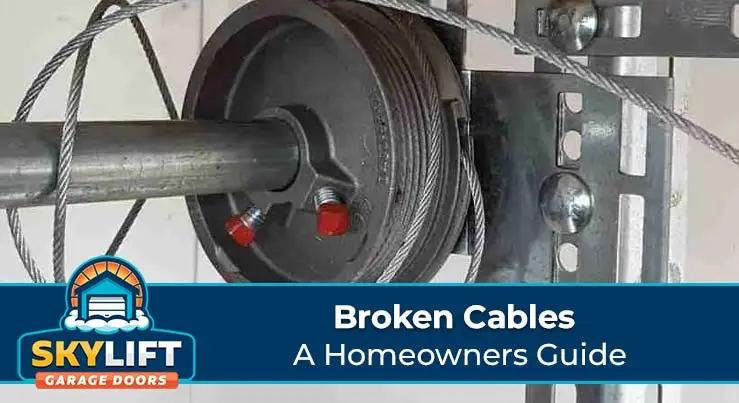
When a garage door cable breaks, everything stops—literally. The door may freeze in place, hang crooked, or refuse to move entirely. Because homeowners often don’t know what caused it or what to do next, the questions come fast. Below are the answers to the most common questions people ask when a garage door cable snaps or shows signs of damage.
How do I know if my garage door cable is broken?
Homeowners usually notice one or more of these signs:
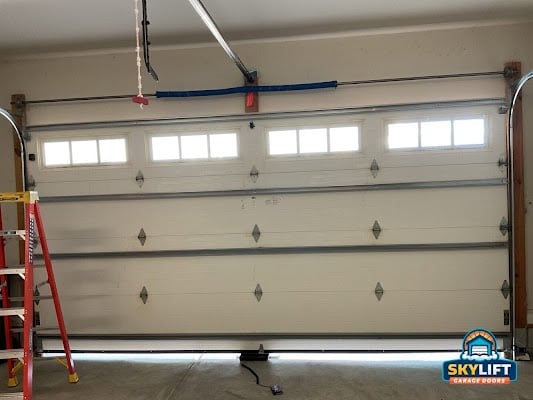
- The door is stuck halfway or tilting to one side
- A visible frayed cable hanging loose near the bottom bracket
- The opener strains but can’t lift the door
- One side of the door rises while the other stays down
- A loud snap or “whip” sound when the cable fails
If the cable came off the drum instead of snapping, the symptoms are similar—crooked door movement or binding during travel.
Why do garage door cables snap or fray in the first place?

Several mechanical and environmental factors contribute:
- Normal wear from years of cycling
- Corrosion or moisture exposure
- Poor lubrication
- Torsion spring imbalance
- Incorrect tension pulling one cable harder than the other
- Friction caused by debris in the track or around the bottom brackets
A frayed garage door cable is a warning sign that failure is coming. Once the strands begin separating, replacement is the only safe option.
Can I still open the door if the cable has broken?
No—at least not safely.
A garage door weighs anywhere from 130 to 300 pounds. With a broken lift cable, the door no longer has balanced support. Trying to force it open can:
- Warp the door panels
- Break the remaining cable
- Pull the door off track
- Damage the opener
- Cause injury from sudden shifting
If the door is stuck closed, technicians can open it manually using controlled techniques that prevent the remaining hardware from failing under stress.
Is a snapped garage door cable dangerous?
Yes, it’s dangerous.
Cables carry tension and stabilise the entire system.
When one cable snaps, the remaining side takes on all the load. That imbalance is what causes crooked lifting, panel stress, and sudden track binding.
If the remaining components fail under that uneven weight, the door may drop, twist, or derail.
What’s involved in a professional garage door cable repair?
A proper repair service goes far beyond simply swapping the cable:
- Secure the door so it can’t fall or move unpredictably
- Release system tension in a controlled manner
- Remove damaged or frayed cables
- Install new torsion or extension cables rated for the door’s weight
- Rebuild or clean the cable drums if needed
- Check the bottom brackets and pulleys for wear
- Set correct spring torque for balanced lifting
- Test full travel to confirm smooth, even movement
This is detailed, technical work—definitely not a DIY job.
Can I prevent cable failure in the future?
Preventive maintenance goes a long way:
- Lubricate moving parts twice a year
- Keep the tracks and bottom brackets clean
- Have spring torque checked periodically
- Replace worn rollers that cause drag
- Schedule annual garage door tune-ups
Cables rarely fail “out of nowhere.” Small signs show up first—noise, slow travel, uneven lifting, stiff manual operation. Those early clues are worth paying attention to.
Bottom line: What should I do if my garage door cable is broken?
Stop using the door immediately and have the system inspected.
A broken garage door cable affects the balance, safety, and structural integrity of the entire door. With proper replacement and realignment, the door will operate smoothly again and prevent further damage.
Have a Broken Garage Door Cable?
Skylift Garage Doors can help fix it fast!
More Expert Garage Door Advice

What does a garage door cable actually do?
Garage door cables help lift and lower the door safely. They work with the torsion or extension spring system to counterbalance the door’s weight. When a lift cable breaks, the door instantly loses stability, which is why the system stops working and sometimes locks itself in place for safety.
Should both garage door cables be replaced at the same time?
Almost always, yes.
If one cable has reached the point of failure, the other is usually close behind. Replacing both ensures equal tension and prevents a second failure days or weeks later.
How long do garage door cables last?
Typical lifespan ranges from 5 to 10 years, depending on:
-
- Number of daily door cycles
-
- Humidity levels
-
- Cable material
-
- Spring balance
-
- Frequency of maintenance
High-cycle cables or premium coated cables last longer and resist fraying more effectively.


MYRTLE BEACH, SC
SKYLIFT GARAGE DOORS

WAKE FOREST, NC
SHOWROOM
1839 S Main St #188
Wake Forest, NC 27587