Garage Door Safety Sensors Explained: How They Work, Common Problems, and Fixes for Knoxville Homeowners
Garage door safety sensors are small, easy to overlook, and absolutely critical. When they’re working correctly, you don’t think about them at all. When they aren’t, your garage door suddenly refuses to close, reverses for no reason, or stops responding entirely.
For homeowners in Knoxville, safety sensor issues are one of the most common garage door service calls — especially in homes with older doors, busy driveways, or frequent temperature swings.
This guide breaks down how garage door safety sensors work, why they fail, and what you can safely troubleshoot yourself before calling a professional.
What Are Garage Door Safety Sensors?
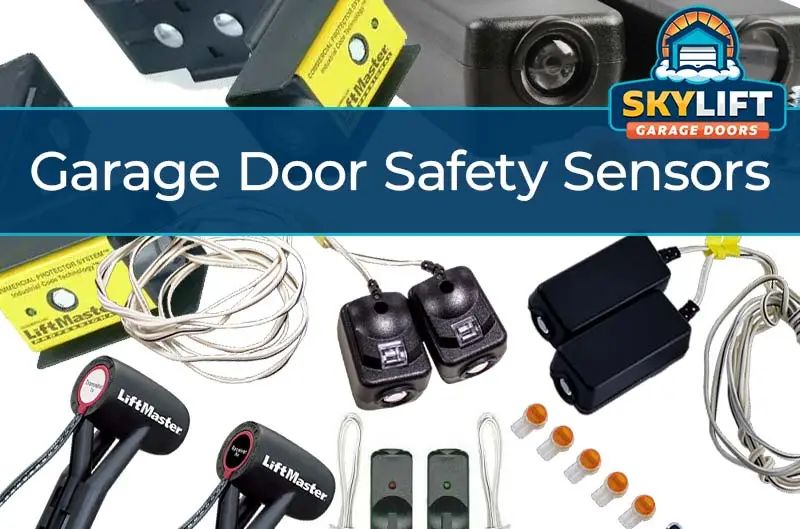
Safety sensors (also called photo-eye sensors) are designed to prevent a garage door from closing on people, pets, or property. They sit near the bottom of the door tracks, usually about 4–6 inches off the ground.
One sensor sends an invisible infrared beam. The other receives it.
If that beam is interrupted while the door is closing, the system immediately reverses the door. This feature has been required on all residential garage doors since the early 1990s.
Why Safety Sensors Matter More Than You Think
A garage door can weigh anywhere from 150 to 400 pounds. Without functioning sensors, that weight can cause serious injury or damage.
Properly working sensors:
- Protect children and pets
- Prevent vehicle damage
- Reduce liability risks
- Keep your garage door system code-compliant
In short, they’re not optional — and bypassing them is unsafe and illegal.
How Safety Sensors Work
Here’s the simple version:
- You press the garage door button
- The door starts to close
- The sensors check that the beam is clear
- If the beam stays uninterrupted → door closes
- If anything breaks the beam → door reverses
When the system senses anything wrong — misalignment, dirt, wiring issues — it assumes danger and stops the door.
That’s why even minor sensor issues can completely shut down your garage door.
Most Common Garage Door Sensor Problems in Knoxville
Knoxville homes face unique challenges: humidity, pollen, temperature swings, and active households all contribute to sensor trouble.
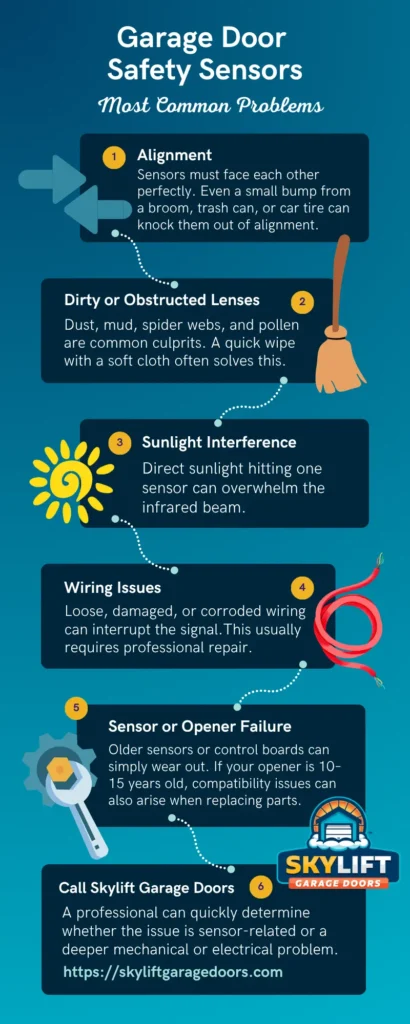
1. Misaligned Sensors
This is the #1 issue.
Sensors must face each other perfectly. Even a small bump from a broom, trash can, or car tire can knock them out of alignment.
Symptoms:
- Door won’t close unless you hold the wall button
- Blinking sensor lights
- Door reverses immediately
2. Dirty or Obstructed Lenses
Dust, mud, spider webs, and pollen are common culprits — especially in East Tennessee.
Symptoms:
- Intermittent operation
- Door works sometimes, fails other times
A quick wipe with a soft cloth often solves this.
3. Sunlight Interference
Direct sunlight hitting one sensor can overwhelm the infrared beam.This happens more often in garages that face east or west — common in many Knoxville neighborhoods.
Symptoms:
- Door won’t close at certain times of day
- Works fine in the evening
4. Wiring Issues
Loose, damaged, or corroded wiring can interrupt the signal.
Causes include:
- Rodents
- Moisture exposure
- Accidental tugs during storage or cleaning
This usually requires professional repair.
5. Sensor or Opener Failure
Older sensors or control boards can simply wear out.If your opener is 10–15 years old, compatibility issues can also arise when replacing parts.
Garage Door Safety Sensors – Knoxville Homeowners
Garage door safety sensors may be small, but they play a huge role in keeping your home safe and functional.
If your door is acting up, blinking, reversing, or refusing to close, the sensors are often the reason — and the fix is usually straightforward when addressed early.
When in doubt, a professional inspection by Skylift Garage Doors is the safest way to restore proper operation.
More Expert Garage Door Advice

How to Troubleshoot Sensor Issues Safely
Before calling for service, here are a few safe checks you can try:
- Clean both sensor lenses
- Confirm both sensors are facing each other
- Check indicator lights (both should be steady)
- Remove any objects near the sensor path
- Try closing the door using the wall button
Important: Never tape sensors together, remove them, or bypass the system. This creates a serious safety risk.
When to Call a Professional
You should call a garage door technician if:
- Sensors won’t align
- Wiring is damaged
- Lights won’t stabilize
- The opener behaves unpredictably
- The door still won’t close after cleaning and alignment
A professional can quickly determine whether the issue is sensor-related or a deeper mechanical or electrical problem.
How Sensor Problems Affect Other Garage Door Components
Ignoring sensor issues can cause:
- Opener strain
- Premature motor failure
- Track damage from repeated reversals
- Increased wear on springs and cables
Fixing the sensors early prevents larger, more expensive repairs later.
Call for Immediate Help
(844) 755-5149


MYRTLE BEACH, SC
SKYLIFT GARAGE DOORS

WAKE FOREST, NC
SHOWROOM
1839 S Main St #188
Wake Forest, NC 27587