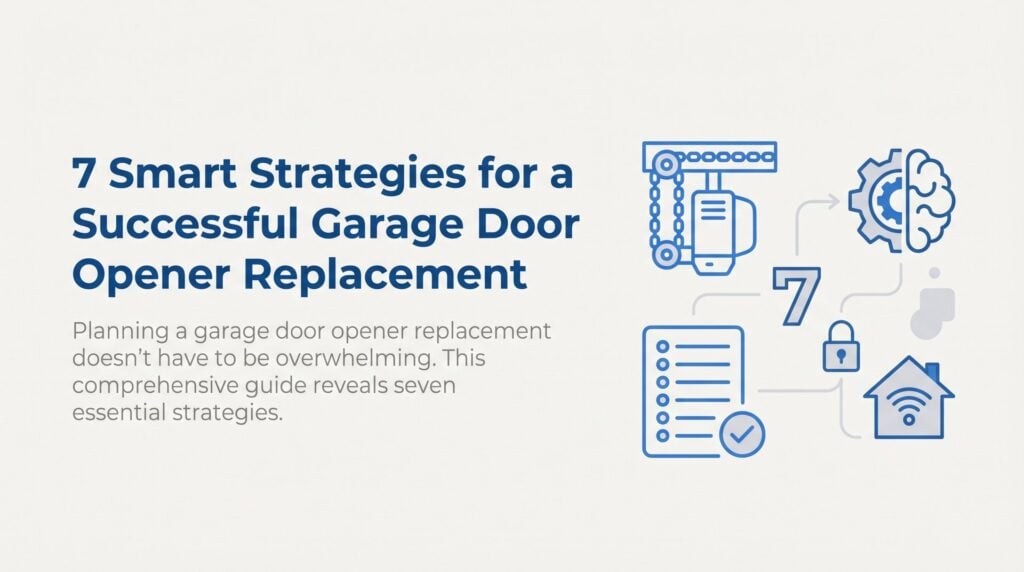
Planning a garage door opener replacement doesn’t have to be overwhelming. This comprehensive guide reveals seven essential strategies to help you identify when your opener needs replacing, choose the right model for your home, and navigate the installation process confidently—ensuring you avoid costly mistakes while improving your garage’s security and functionality.
Your garage door opener works tirelessly day after day, often going unnoticed until something goes wrong. Maybe it’s making strange grinding noises, moving slower than usual, or simply refusing to respond to your remote. Whatever the case, knowing when and how to replace your garage door opener can save you from unexpected headaches and security concerns.
Think of your garage door opener like the engine in your car. It might keep running for years, but eventually wear and tear catch up. The question isn’t if you’ll need to replace it, but when—and how to do it right.
This guide walks you through seven practical strategies that’ll help you navigate the replacement process with confidence—from recognizing the warning signs to selecting the perfect new unit for your home.
1. Recognize the Telltale Signs That Replacement Time Has Arrived
The Challenge It Solves
Many homeowners wait until their garage door opener completely fails before considering replacement. This reactive approach can leave you stuck outside on a rainy morning or create security vulnerabilities when the door won’t close properly. Recognizing early warning signs helps you plan the replacement on your schedule rather than during an emergency.
The Strategy Explained
Your garage door opener communicates its health status through several clear signals. Unusual grinding, squealing, or rattling noises often indicate worn gears or motor components. If your door moves slower than it used to or struggles to lift fully, the motor may be losing power. Inconsistent response to remote commands suggests failing circuit boards or outdated technology.
Age matters too. Most openers function well for 10-15 years depending on usage and maintenance. If yours predates modern safety standards, it likely lacks essential features like auto-reverse sensors that prevent injuries and property damage. Understanding when to repair or replace your garage door opener motor can help you make the right decision.
Implementation Steps
1. Test your opener’s response time by pressing the wall button and noting any delays or hesitation before the door moves.
2. Listen carefully during operation for grinding, scraping, or unusual vibration sounds that weren’t present before.
3. Check the manufacture date on your opener’s motor housing—if it’s approaching or past 12-15 years, start planning replacement even if it still functions.
4. Verify that safety sensors are present and working by placing an object in the door’s path during closing.
Pro Tips
Keep a simple log of when problems occur. If issues happen sporadically, note the weather conditions and temperature—some openers struggle more in extreme cold or heat, which can help you diagnose whether it’s truly time for replacement or just needs adjustment. Our garage door opener troubleshooting guide can help you identify common issues.
2. Match Your New Opener to Your Door’s Weight and Size
The Challenge It Solves
Installing an underpowered opener forces the motor to work harder than designed, leading to premature failure and potential safety issues. Conversely, oversizing wastes money on capacity you’ll never use. Getting the horsepower right ensures smooth operation and maximizes your investment’s lifespan.
The Strategy Explained
Garage door openers use horsepower ratings to indicate lifting capacity. Standard single doors with lightweight materials typically work well with 1/2 HP units. Heavier single doors or standard double doors benefit from 3/4 HP models. If you have a heavy wooden door, oversized door, or commercial-grade installation, consider 1 HP or higher.
Door material makes a significant difference. A single-car steel door might weigh 130 pounds, while a wooden door of the same size could exceed 200 pounds. Insulated doors add weight too, requiring more lifting power. When choosing a replacement garage door, factor in how the door’s weight affects your opener requirements.
Implementation Steps
1. Measure your garage door dimensions—single doors are typically 8-9 feet wide, while double doors span 15-16 feet.
2. Identify your door material by checking the manufacturer’s label or examining the construction (steel, wood, aluminum, or composite).
3. Lift your door manually after disconnecting the opener to gauge its weight—if it feels heavy or difficult to lift smoothly, opt for higher horsepower.
4. Consult the new opener’s specifications to confirm it handles your door’s weight and size comfortably.
Pro Tips
When in doubt, go up one horsepower level rather than down. The price difference is usually minimal, but an opener running below capacity will last significantly longer than one constantly straining against a heavy door.
3. Choose the Drive Type That Fits Your Lifestyle
The Challenge It Solves
Different drive mechanisms offer distinct advantages in noise level, maintenance requirements, and durability. Selecting the wrong type for your situation can mean living with annoying rattling sounds or dealing with frequent adjustments. Understanding your priorities helps you choose the drive system that matches your daily life.
The Strategy Explained
Chain-drive openers use a metal chain to pull the door up and down. They’re durable and typically the most affordable option, but they create more noise during operation. Belt-drive systems replace the chain with a rubber belt, operating much more quietly—ideal if you have bedrooms above or adjacent to the garage.
Screw-drive openers use a threaded steel rod and require fewer moving parts, meaning less maintenance. They operate at moderate noise levels and work well in various climates. Direct-drive units mount the motor directly on the trolley, creating minimal noise and vibration with only one moving part.
Implementation Steps
1. Map out which rooms in your home share walls or floors with the garage to assess how noise might impact daily life.
2. Consider your climate—screw drives perform consistently across temperature ranges, while chain drives may need seasonal adjustments.
3. Compare your budget against your noise tolerance—belt drives cost more initially but deliver whisper-quiet operation.
4. Factor in maintenance willingness—chain drives need periodic lubrication, while belt drives require minimal upkeep.
Pro Tips
If you’re replacing an older chain-drive opener and noise hasn’t bothered you, another chain drive will serve you well at lower cost. But if you’ve ever been awakened by your garage door, the investment in a belt or direct drive pays dividends in peace and quiet.
4. Prioritize Modern Safety and Security Features
The Challenge It Solves
Older garage door openers lack the safety mechanisms that protect your family and property. Fixed-code systems are vulnerable to code-grabbing devices, while openers without auto-reverse sensors pose serious injury risks. Upgrading to modern safety features transforms your garage from a potential liability into a secure, protected space.
The Strategy Explained
Current safety standards require photo-eye sensors that detect obstructions and automatically reverse the door. This prevents injuries to children, pets, or anyone who might be in the door’s path. Auto-reverse mechanisms also engage if the door encounters unexpected resistance during closing.
Rolling code technology changes your access code with each use, making it virtually impossible for thieves to intercept and replay your signal. Battery backup systems keep your opener functional during power outages, ensuring you’re never locked out or trapped inside your garage. Many modern garage door opener motors include smart features that enhance both safety and convenience.
Implementation Steps
1. Verify that any opener you consider includes photo-eye sensors as standard equipment—this is non-negotiable for safety.
2. Confirm the opener uses rolling code technology rather than fixed codes that can be easily compromised.
3. Evaluate whether battery backup matters for your situation—if power outages are common in your area, this feature provides essential peace of mind.
4. Look for manual release mechanisms that allow you to disconnect the opener and operate the door manually if needed.
Pro Tips
Test safety features immediately after installation and monthly thereafter. Place a cardboard box in the door’s path to confirm the photo-eye sensors work properly. This simple habit catches problems before they become dangerous.
5. Embrace Smart Technology for Added Convenience
The Challenge It Solves
How many times have you left home wondering if you closed the garage door? Traditional openers leave you guessing, forcing you to drive back and check or worry all day. Smart technology eliminates this anxiety while adding layers of convenience that transform how you interact with your garage.
The Strategy Explained
WiFi-enabled garage door openers connect to your home network, allowing smartphone control from anywhere. You can check door status in real-time, receive alerts when the door opens or closes, and even grant temporary access to delivery drivers or guests without sharing physical remotes. Exploring the advantages of smart garage door openers can help you understand the full range of benefits.
Integration with home automation systems lets you create routines—like automatically closing the garage door at bedtime or when your security system arms. Voice control through smart assistants adds another layer of convenience for hands-free operation.
Implementation Steps
1. Assess your home’s WiFi coverage in the garage—smart openers need reliable connectivity to function properly.
2. Review which smart home platforms the opener supports if you already use systems like Amazon Alexa, Google Home, or Apple HomeKit.
3. Consider whether you want activity notifications—some households appreciate knowing when kids arrive home, while others find frequent alerts annoying.
4. Evaluate subscription costs for advanced features—some manufacturers charge monthly fees for extended monitoring or cloud storage.
Pro Tips
If you’re not ready to commit to a full smart opener, some manufacturers offer WiFi adapter modules that add connectivity to traditional openers. The new Kwikset Flex garage door opener represents one of the latest innovations in smart garage technology.
6. Weigh the DIY Route Against Professional Installation
The Challenge It Solves
The decision between self-installation and hiring professionals involves more than just cost savings. Improper installation can create safety hazards, void warranties, and lead to premature equipment failure. Understanding your capabilities and the complexity involved helps you make the choice that delivers the best long-term value.
The Strategy Explained
DIY installation appeals to handy homeowners comfortable with basic electrical work and mechanical assembly. Modern openers include detailed instructions, and the process typically takes 4-6 hours for someone with moderate skills. You’ll save the installation fee, usually between $150-$300.
Professional installation brings expertise in proper alignment, force adjustment, and safety feature calibration. Installers spot potential issues with door balance or track alignment that could affect performance. Most importantly, professional installation often includes warranties covering both labor and parts. Issues like garage door spring replacement should always be handled by professionals due to the inherent risks involved.
Implementation Steps
1. Honestly assess your comfort level with electrical connections, ladder work, and following technical instructions.
2. Check whether DIY installation affects the manufacturer’s warranty—some require professional installation to maintain coverage.
3. Consider your available time—rushing through installation to meet a deadline increases the chance of mistakes.
4. Evaluate the complexity of your specific situation—cathedral ceilings, limited headroom, or unusual door configurations favor professional help.
Pro Tips
Even if you’re capable of DIY installation, having a professional handle the initial setup and then maintaining it yourself offers a middle ground. You get the peace of mind from proper installation while building knowledge for future adjustments and troubleshooting.
7. Plan for Long-Term Performance with Proper Setup
The Challenge It Solves
Installing a new opener is just the beginning. Without proper configuration and regular maintenance, even premium units underperform and fail prematurely. Establishing good habits from day one ensures your investment delivers years of reliable service.
The Strategy Explained
Force settings determine how hard your opener works to move the door. Set too high, the opener won’t reverse when meeting resistance. Set too low, the door won’t close completely. Proper calibration balances smooth operation with safety responsiveness.
Regular maintenance extends lifespan significantly. Simple tasks like lubricating moving parts, tightening hardware, and cleaning photo-eye sensors take minutes but prevent major problems. Understanding whether you need garage door panel replacement vs repair is also part of maintaining your overall garage door system.
Implementation Steps
1. Adjust force settings according to manufacturer specifications, then test by placing resistance in the door’s path to confirm proper reversal.
2. Create a maintenance schedule—monthly visual inspections, quarterly lubrication of moving parts, and annual professional tune-ups.
3. Keep the photo-eye sensors clean and properly aligned by wiping them with a soft cloth and checking that the indicator lights show solid connection.
4. Document your opener’s model number, installation date, and warranty information in an easily accessible location.
Pro Tips
Set a recurring reminder on your phone for the first day of each season to perform basic maintenance. This quarterly rhythm catches small issues before they escalate and keeps your opener running smoothly through temperature changes and weather extremes.
Your Roadmap to Opener Success
Replacing your garage door opener doesn’t have to feel overwhelming. Start by honestly assessing your current unit’s condition—those strange noises and sluggish performance are telling you something important.
Work through each strategy systematically. Match the right horsepower to your door’s actual weight and size. Select your preferred drive type based on where you actually live and what matters most to you. Decide which smart features will genuinely improve your daily routine rather than just sounding impressive.
The installation decision deserves careful thought. If you’re handy and have the time, DIY can work beautifully. But don’t let pride push you into a project that’s beyond your skill level or available time. Professional installation often delivers better long-term value through proper setup and warranty protection.
Once your new opener is running, commit to basic maintenance. Those few minutes each month testing safety features and keeping everything lubricated will reward you with years of trouble-free operation.
Ready to upgrade your garage door opener with confidence? Learn more about our services and discover how professional guidance can make your replacement project smooth and successful. Your garage door will thank you.